Financial Pathways Unlocking Multi-Tiered Returns in Mobile Table Game Platforms
Sofia Schwarz · Aug 21, 2026

Financial Pathways Unlocking Multi-Tiered Returns in Mobile Table Game Platforms
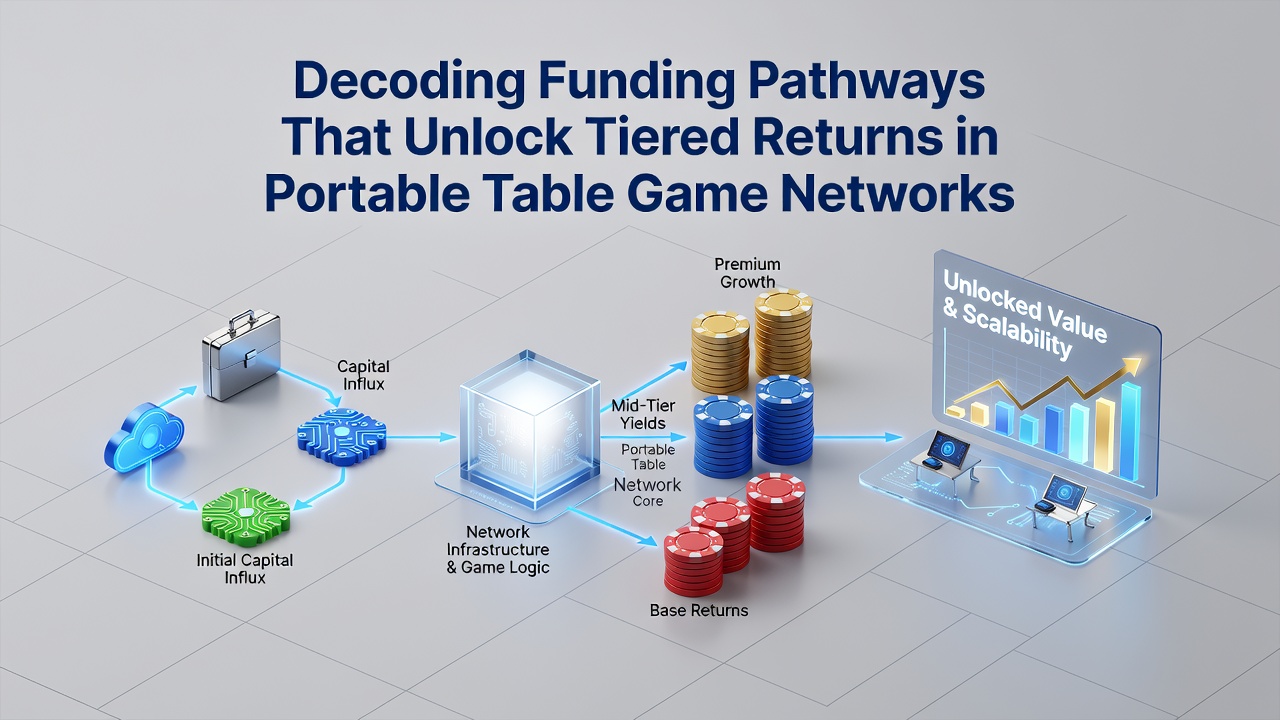
Portable table game networks operate through layered capital structures where initial funding commitments determine access to graduated return mechanisms, and operators allocate resources across development, integration, and player engagement layers. Data from regulatory filings indicate that seed investments, venture rounds, and strategic partnerships each trigger distinct payout thresholds within these systems, while platform operators track participation metrics to adjust reward distributions accordingly.
Capital Sources and Their Structural Impacts
Equity financing from institutional investors typically unlocks base-level return tiers by supporting core infrastructure such as server scaling and game certification processes, whereas debt instruments from banking entities enable mid-tier expansions including advanced analytics modules that refine player segmentation. Researchers at academic centers have documented how convertible notes combine these approaches, allowing networks to shift between fixed and variable return schedules based on performance benchmarks reached during quarterly reviews.
Government-backed innovation grants in select jurisdictions further modify these dynamics because they often carry stipulations that tie disbursements to compliance milestones, which in turn stabilize lower return bands for smaller operators entering the market. Industry reports compiled through 2026 highlight that networks relying on mixed funding portfolios achieve broader tier coverage compared with those dependent on single-source capital.
Tier Mechanics in Practice
Return tiers within portable table game networks function through algorithmic gates that respond to cumulative funding velocity, and once thresholds are crossed, systems automatically recalibrate RTP parameters alongside loyalty multipliers. Observers note that early-stage networks frequently begin with uniform return bands before scaling to differentiated levels that reward sustained capital inflows with accelerated feature unlocks and cross-game transfer options.
Payment integration layers play a central role here, since transaction volume data feeds directly into tier progression engines, and networks that incorporate diverse wallet solutions tend to accelerate movement between levels. Figures released in August 2026 by monitoring agencies showed measurable increases in tier advancement rates following the adoption of multi-currency settlement protocols across several regional platforms.
Regional Variations and Data Patterns
North American operators have leaned toward venture-backed models that prioritize rapid tier escalation, while Asia-Pacific networks often combine state-linked funding with private equity to maintain steadier progression across return bands. A study issued by the Australian Gambling Research Centre examined how these blended approaches affect long-term network stability and found correlations between diversified capital sources and reduced volatility in tier retention rates.
European frameworks, by contrast, emphasize regulatory oversight that links licensing renewals to transparent funding disclosures, which influences how quickly networks can activate higher return tiers. Data aggregated by the Nevada Gaming Control Board through mid-2026 revealed that platforms disclosing layered funding histories experienced smoother approvals for expanded game libraries tied to advanced reward structures.
Operational Examples Across Networks
One documented case involved a mid-sized operator that secured bridge financing to integrate live dealer modules, resulting in immediate elevation from entry-tier returns to performance-linked bands that adjusted dynamically with player activity. Another network utilized grant funding to pilot tokenized reward systems, and subsequent metrics indicated accelerated movement into premium tiers once transaction thresholds were met.
These examples illustrate how funding timing interacts with network architecture, because capital deployed during peak development windows tends to compress the intervals between tier activations. Analysts tracking portable platforms report that networks maintaining continuous funding pipelines sustain higher average return accessibility for participants across multiple device ecosystems.
Conclusion
Capital pathways in portable table game networks continue to evolve through combinations of equity, debt, grants, and partnership structures that each map onto specific return tier configurations. Regulatory data and academic reviews confirm that diversified funding correlates with broader tier accessibility, while concentrated sources produce narrower but sometimes more stable progressions. As platforms refine integration standards and compliance requirements shift, the mapping between investment routes and graduated returns remains a central operational consideration for network operators worldwide.